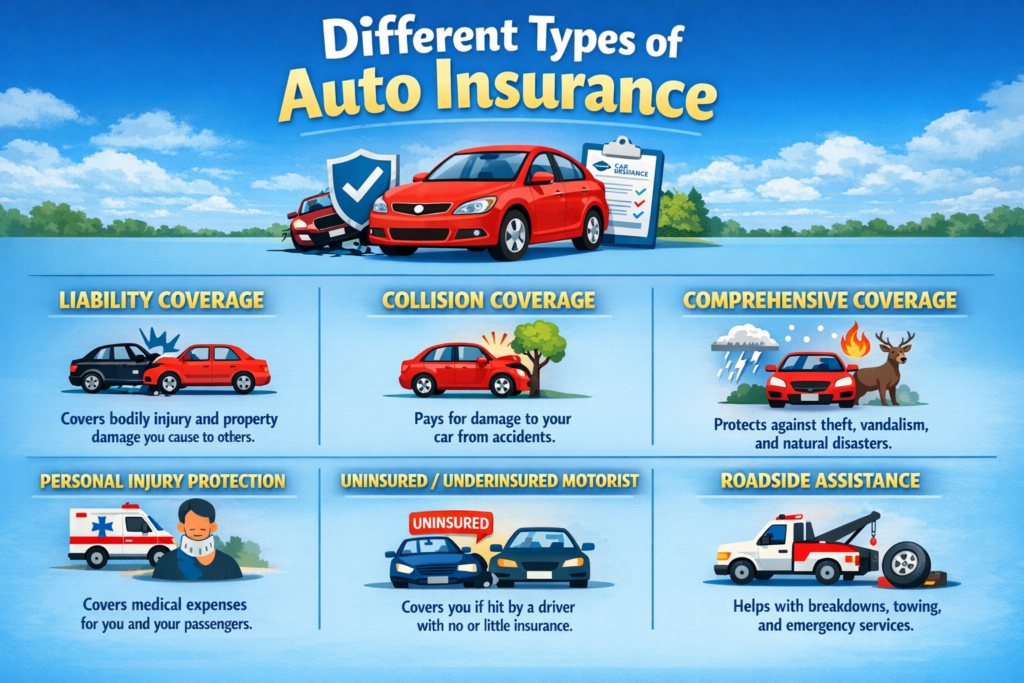
Understanding auto insurance can feel overwhelming, especially with so many options available today. Each type of coverage serves a unique purpose and protects drivers in different ways. By learning about these various types, individuals can make informed decisions that best suit their needs.
Exploring the Key Types of Auto Insurance Policies Today
When searching for auto insurance, many people encounter liability coverage as one of the most common types. Liability insurance covers damages that a policyholder causes to another person or their property in an accident. This type of insurance often comes in two parts: bodily injury liability and property damage liability. Bodily injury liability pays for medical expenses for the other party, while property damage liability covers repairs to their vehicle or property. Thus, having sufficient liability coverage is essential for financial protection.
Another vital type of auto insurance is collision coverage. Collision coverage reimburses policyholders for damages to their vehicle after an accident, regardless of who is at fault. For instance, if a driver collides with another car, collision coverage will help pay for repairs. Having this type of insurance can provide peace of mind, particularly for those with newer or more expensive vehicles. Additionally, collision coverage often comes with a deductible, which is the amount the policyholder must pay out-of-pocket before the insurance kicks in.
Comprehensive coverage offers protection against more than just accidents. This type of insurance covers damages caused by factors like theft, vandalism, fire, or natural disasters. For example, if a tree falls on a parked car during a storm, comprehensive coverage will help cover the repair costs. Many drivers find that comprehensive coverage is especially valuable in high-risk areas where such incidents are more likely to occur. Consequently, combining comprehensive and collision coverage can offer a more rounded protection plan for vehicle owners.
Comprehensive Guide to Auto Insurance Coverage Options
Personal injury protection, often referred to as PIP, is another essential type of auto insurance coverage. PIP helps cover medical expenses for the policyholder and their passengers, regardless of fault in an accident. This type of coverage can also cover lost wages and rehabilitation costs, making it particularly beneficial for individuals who may require time off work after an accident. Many states require drivers to have PIP because it ensures that people receive necessary medical treatment promptly. Thus, understanding PIP can significantly impact a policyholder’s financial security.
Uninsured and underinsured motorist coverage protects drivers in cases where the at-fault party lacks sufficient insurance. If a driver with inadequate coverage causes an accident, this type of insurance helps cover the costs. Consequently, it can prevent financial hardship for victims of accidents caused by uninsured or underinsured motorists. Many individuals strongly consider adding this coverage, especially in areas where uninsured driving rates are high. It serves as an additional layer of protection, giving drivers peace of mind during their travels.
Lastly, there is gap insurance, which is especially useful for individuals who finance or lease their vehicles. If a car is totaled, gap insurance helps cover the difference between the vehicle’s actual cash value and the remaining loan or lease amount. Without gap insurance, individuals could end up owing money on a car that no longer exists. Therefore, those who have financed their vehicles should strongly consider this option. It can save drivers from significant financial loss in the unfortunate event of a total loss.
Conclusion
In summary, understanding the various types of auto insurance available today is crucial for making informed decisions. Liability, collision, comprehensive, personal injury protection, and uninsured motorist coverage each serve unique roles in providing protection. Additionally, gap insurance offers essential security for financed vehicles. By grasping the nuances of these coverage options, individuals can tailor their policies to their specific needs. Consequently, investing the time to understand these types of insurance can lead to better financial outcomes and greater peace of mind on the road. Ultimately, the right auto insurance can make all the difference in an unexpected situation.